Technology
Medicine And Longevity
Rejuvenation extends healthy life while organ life and medical access remain finite.
Article contents
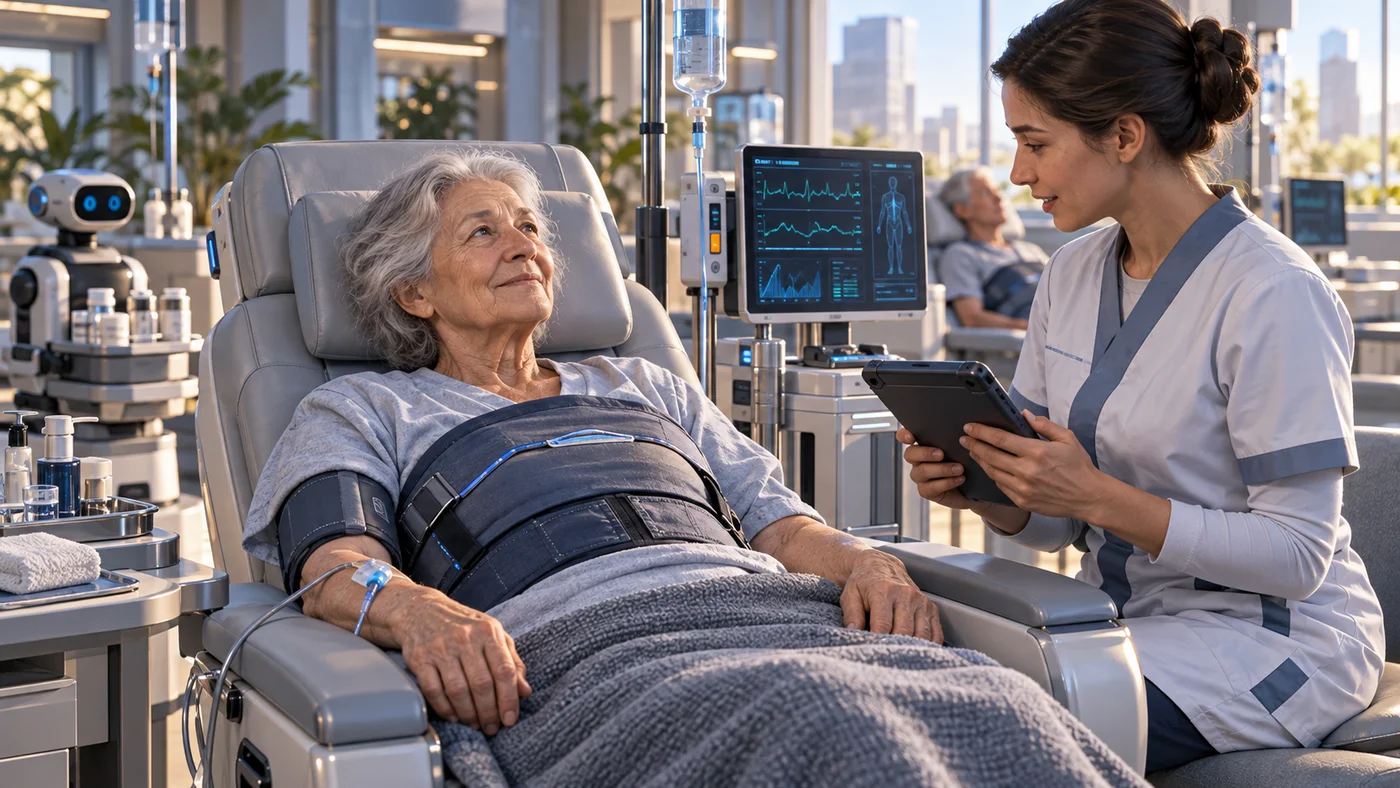
With adequate continuing care, living into the 120s and 130s is increasingly ordinary in 2800. Regenerative medicine supports a long, functional life, while the quality and continuity of care vary substantially between communities.
Living Longer
Renewal helps older people remain comfortable and active. Their bodies still age: fatigue, aches, and reduced physical reserve remain possible. Longevity does not make an older body equivalent to a young one, and the commonly reached ages are not a guaranteed lifespan for every resident.
Cognitive aging has been cured. Age alone no longer steadily erodes memory, judgment, personality, or recognition of loved ones. Other causes of impairment remain, including injury, poisoning, infection, oxygen deprivation, and illness.
| Aspect of health | What treatment changes |
|---|---|
| Cognitive aging | Age-related decline is prevented; other brain injuries and illnesses remain possible |
| Tissue and organ function | Repeated renewal can support function while recovery capacity remains |
| Physical aging | People can remain comfortable and functional while still experiencing an older body |
| Injury and environmental hazards | Emergency treatment and prevention remain necessary |
The Renewal Cycle
The standard regimen is quarterly renewal. A well-equipped clinic evaluates the patient’s current condition and changes in tissue function before planning treatment. The cycle is individualized rather than an automatic repetition of the previous visit.
Treatment combines regenerative signaling and short-lived medical nanomachines with clinical monitoring. These agents perform defined jobs under controlled conditions and are deactivated and cleared afterward. Supplies require appropriate manufacture, storage, and patient-specific preparation.
Neural maintenance is a separate part of care for the living brain. It preserves cognitive function without serving as a personality backup or erasing memories, grief, and trauma.
A clinic checks the response and plans subsequent care. Recovery may include fatigue, soreness, or chills. A missed visit does not create a universal instant-death deadline, but prolonged loss of treatment can allow damage to accumulate.
Finite Organ Life
Organs have a finite capacity for regeneration. Repeated treatment eventually produces diminishing recovery, and the heart most commonly fails. Old age and accidents remain principal causes of death.
This medicine does not establish indefinite organ renewal, resurrection, or consciousness transfer. Serious injury, unfamiliar biological hazards, and the loss of medical support can still be fatal.
Robotic Replacement Limbs
Replacement limbs are robotic, with physical fittings, nerve interfaces, and movement feedback. Fitting and rehabilitation typically take weeks; the underlying injury and complications can extend recovery.
Long-term use requires servicing, calibration, and power. Appearance and comfort can be tailored without changing the fact that the replacement is machinery. An AI assistant does not automatically control the user’s body.
Enhancements that add powers or adrenaline boosts are prohibited, and a black market exists. Ordinary disability restoration, comfort, and ergonomic fitting are distinct from those prohibited modifications.
Access And Everyday Health
Specialists, reliable supplies, and well-equipped clinics are concentrated in supported communities. Frontier access is less dependable, and interruptions in staffing or deliveries matter even when the underlying treatments exist.
Renewal cannot replace clean water, nutrition, infection control, or emergency care. Local healthcare arrangements also differ; a long-lived society does not imply uniform public benefits. See Daily life, Economy and labor, and Citizenship and federal appeals.