Technology
Fabrication And Interfaces
Everyday augmented interfaces and fabrication depend on equipment and supplies.
Article contents
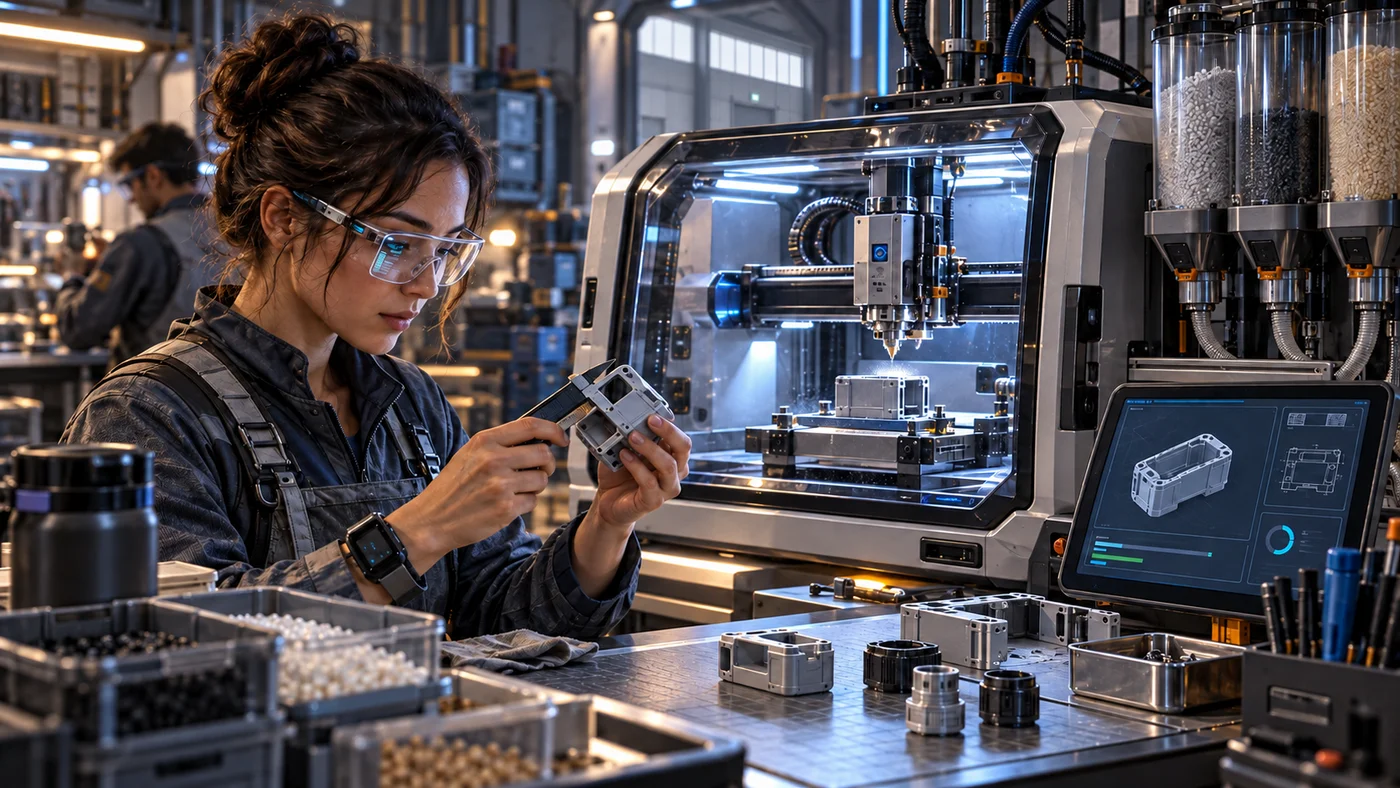
Neural interfaces, augmented reality, and local fabrication are part of everyday technology in 2800. They help people use information and maintain equipment, while their availability and quality vary by system, household, and workplace.
Ways To Control Equipment
Users interact through physical controls, wearables, and voluntary neural interfaces. A neural interface handles intended commands for calibrated functions, such as selecting an augmented display, addressing an assistant, or operating a fitted replacement limb.
It does not read every thought, extract a personality, or give another person automatic control of the user’s mind. Its usefulness depends on the equipment connected to it and the functions for which it has been configured.
An assistant can accompany its user across compatible devices. That continuity does not give each device every capability or authorize access to every machine. See AI and robotics.
Augmented Reality
Augmented information can appear through lenses, visors, neural displays, or ordinary screens. Uses include directions, translation, messages, manuals, medical reminders, entertainment, and machine status.
A private overlay is not automatically visible to bystanders. The display also depends on actual information: an old record, obscured sensor, or delayed update can produce an incomplete or misleading view. An overlay does not establish a way to see through walls or identify every unfamiliar organism or infection.
Locally available displays and assistants can continue working during an external communications outage. Information from another system still has to arrive through the transport network described in Gates and communications.
Household And Workshop Fabrication
Fabricators turn stocked feed material into suitable objects using fabrication files and the capabilities of the machine. Household uses include utensils, containers, fittings, and housings. Workshops and industrial facilities can handle larger pieces, suitable alloys, and more complex parts.
The result depends on more than having a file. Material, power, tooling, calibration, time, and quality control all affect what can be made. Different machines serve different ranges of work.
| Requirement | Why it matters |
|---|---|
| Feed material | The object must be made from an available, appropriate substance |
| Equipment and tooling | The machine must support the required work and precision |
| Power and time | Production consumes resources and takes time |
| Skills and checking | A part must be assessed for its intended use |
What Local Production Cannot Replace
Specialized electronics, clinical products, and complex industrial components still depend on supply chains. A household machine does not produce a complete robotic limb, reactor, or medical nanomachines merely because someone has a design file.
Local fabrication can support repair without making every missing component available. A usable housing may still need an imported sensor; a workshop may have the file for a fitting but lack the appropriate material or tooling.
These limits matter especially in communities with infrequent deliveries. Fabrication makes some maintenance possible locally, while shortages of feedstock, specialist parts, and trained labor remain consequential. Economy and labor and Daily life explain the wider setting; Medicine and longevity covers clinical equipment and robotic limbs.